What Is a Circuit Breaker Box MCB and How Does It Work?

Time:2026-10-08 Author:Sienna
0%

A Circuit Breaker Box Mcb is the control center for many modern electrical systems. It distributes power through separate circuits and protects wiring from dangerous current levels. You may find it near an entrance, utility room, or garage. Inside, each MCB connects to a specific circuit, such as lighting, sockets, or kitchen appliances.

An MCB works through two protective actions. A thermal mechanism responds to sustained overloads. For example, several high-power appliances may heat a circuit beyond its safe capacity. A magnetic mechanism reacts almost instantly to a short circuit. This rapid trip helps limit damage to cables, equipment, and surrounding materials. You may hear a sharp click. That sound matters.

In professional inspections, technicians check labeling, terminal tightness, enclosure condition, and signs of heat discoloration. A loose connection can create warmth before the MCB trips. That detail is easy to miss. The breaker rating must also match the cable size and circuit design, not merely the appliance’s power demand. Local electrical rules and manufacturer instructions remain essential.

This guide explains how an MCB detects faults, why it trips, and what the switch positions mean. It also considers common causes of repeated tripping. A simple explanation can hide important details. Real panels are rarely as tidy as diagrams suggest. Never remove the cover or handle live parts without suitable training and authorization. Safe diagnosis depends on measured evidence, correct tools, and qualified electrical expertise.
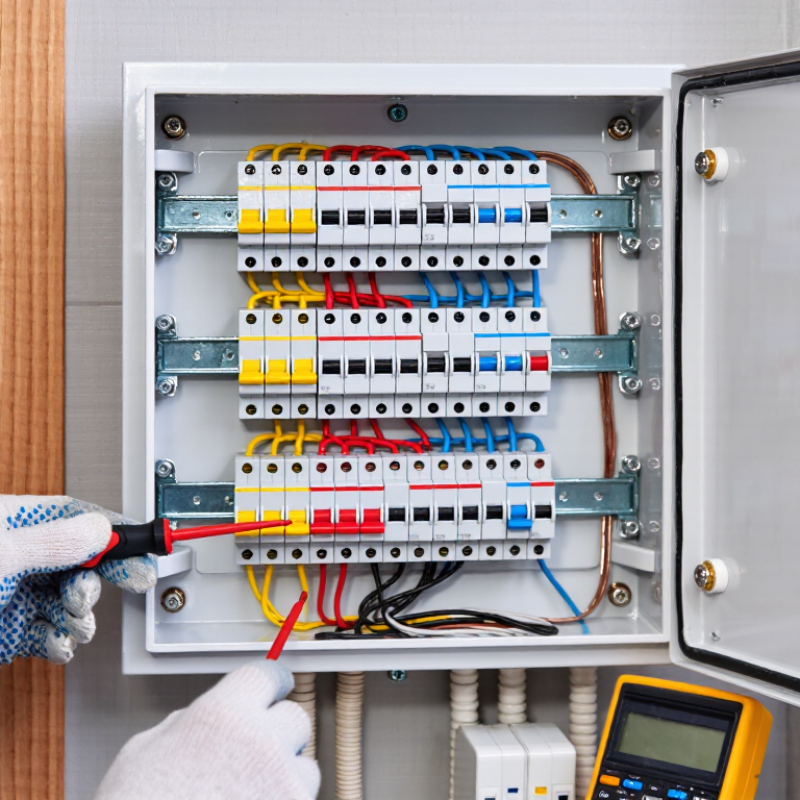
What Is a Circuit Breaker Box MCB and How Does It Work?

What a Circuit Breaker Box MCB Is and What It Controls

A circuit breaker box MCB is the control center for a building’s final electrical circuits. MCB means miniature circuit breaker. It protects wiring from excessive current. Each device usually controls one circuit, such as lighting, sockets, or a water heater. It does not control every appliance separately.

Inside, a thermal mechanism responds to overloads. A magnetic mechanism reacts to sudden short circuits. When either condition occurs, the MCB opens the circuit and stops current flow. The IEC 60898-1 standard defines performance requirements for household and similar circuit breakers. Common B, C, and D trip curves suit different starting currents. Choosing the wrong curve can cause nuisance trips or delayed protection.

The IEA Electricity 2024 report expects global electricity demand to grow by about 4% in 2024 and 2025. More demand makes correct circuit allocation increasingly important. During inspections, I check the circuit label, conductor size, terminal tightness, and trip rating together. A high-rated MCB cannot make undersized wiring safe. That mistake still appears in real installations.

MCBs control circuits, not just switches.

When an MCB trips, unplugging one device may not solve the cause. Overloaded sockets, damaged insulation, or motor startup can all be involved. A qualified electrician should test the circuit before repeatedly resetting it. Small panels can hide large problems.

The Main Parts and Electrical Roles Inside an MCB

A miniature circuit breaker (MCB) sits inside the circuit breaker box and protects one electrical circuit. It is a small switch with a serious job. The casing provides insulation and mechanical strength, while the terminals clamp incoming and outgoing conductors. The operating lever resets the circuit after a fault, although resetting without checking the cause can be unsafe.

Inside, the fixed and moving contacts carry normal current. A thermal bimetal strip responds to sustained overloads. As it heats, it bends and releases the trip mechanism. A magnetic coil reacts to a sudden short circuit. It reacts fast. IEC 60898-1 defines common tripping characteristics: Type B operates at about three to five times rated current, while Type C operates at five to ten times. Type D requires roughly ten to twenty times. These figures guide circuit selection, not casual replacement.

The arc chamber is another critical part. When contacts separate, an electrical arc forms; metal plates divide and cool it before it damages surrounding components. The rated current, voltage, breaking capacity, and pole arrangement determine the MCB’s safe application. NFPA electrical-safety guidance treats overcurrent protection as essential for limiting conductor heating and fire risk. Field inspections still find loose terminals, mismatched ratings, and repeated resets. That distinction matters. A correctly sized MCB protects wiring, but it cannot repair damaged insulation or poor installation.

How an MCB Detects Overloads and Short Circuits

A circuit breaker box MCB protects a circuit by interrupting abnormal current. Its operation is simple, but its timing matters. During an overload, current rises above the MCB’s rated level for several seconds or minutes. A bimetal strip heats, bends, and releases the trip mechanism. This delay allows brief starting currents from motors or appliances without unnecessary disconnection.

A short circuit behaves differently. Current can jump sharply when live and neutral conductors touch. The MCB’s magnetic coil responds almost instantly, pulling a latch and opening the contacts. The arc chute then divides and cools the electrical arc inside the device. Under IEC 60898-1, domestic MCBs are tested for defined current, voltage, and short-circuit performance conditions. However, laboratory results do not replace correct installation.

The numbers deserve attention. NFPA’s Home Structure Fires report, covering 2015–2019 data, found electrical distribution and lighting equipment involved in about 12% of home fires. These incidents also represented roughly 18% of civilian fire deaths. An MCB cannot correct loose terminals, damaged insulation, or poor maintenance. That assumption is dangerous.

In practical inspections, technicians check conductor size, terminal torque, trip rating, and signs of heat discoloration. A breaker that trips repeatedly may be revealing a genuine overload, not suffering from a fault. Resetting it again and again is a poor diagnostic method. The overlooked detail is coordination: upstream and downstream protective devices should disconnect selectively, limiting the affected area.

How an MCB Interrupts Faulty Current Step by Step

A miniature circuit breaker, or MCB, protects a low-voltage circuit from excessive current. It usually responds to overloads and short circuits. During panel inspections, the trip mechanism is easy to understand when viewed step by step.

When a heavy load stays connected, current heats a bimetal strip inside the MCB. The strip bends gradually as temperature rises. After reaching its calibrated point, it releases the latch. The contacts spring apart and stop the current. This thermal action may take seconds or minutes, depending on the overload level. That delay allows normal starting currents to pass without unnecessary tripping.

A short circuit behaves differently. The sudden current creates a strong magnetic field around an internal coil. The magnetic force moves a plunger almost instantly. It releases the latch, and the contacts separate within a very short time. An arc may appear between them, but internal arc-control parts divide, cool, and extinguish it. The circuit then remains open until someone resets the handle. It is not magic. The MCB only works correctly when its rating matches the conductor and circuit conditions.

A common mistake is treating a tripped handle as proof of a failed breaker. The fault may still exist downstream. Resetting repeatedly can worsen damage and create heat. In practice, a qualified technician checks the load, wiring, terminals, and insulation before restoring power. The handle can look normal, yet the circuit may remain unsafe. That detail deserves attention.

Choosing, Resetting, and Maintaining an MCB Safely

An MCB, or miniature circuit breaker, protects a circuit from overloads and short circuits. Choosing one safely requires more than matching its appearance. Check the circuit’s voltage, rated current, number of poles, and breaking capacity. The cable size must support the selected rating. Never install a larger-rated MCB just to stop nuisance tripping. That may hide an overheating cable inside the wall.

When an MCB trips, switch off or unplug several appliances before resetting it. Move the handle fully to the off position, then back on. If it trips again immediately, stop resetting it. A faulty appliance, damaged cable, or persistent overload may be involved. During practical inspections, warm plastic, dark marks, buzzing, or a burning smell deserve urgent attention. An MCB that resets is not necessarily a healthy circuit. This is an easy detail to overlook.

Tips:

Keep the distribution board dry and unobstructed. Label each circuit clearly, especially in older homes. Check for loose covers or visible damage, but never remove the panel cover while energized. Periodic inspection by a qualified electrician is sensible, particularly after renovations or repeated trips. I would also record when trips occur; the time and connected appliances can reveal a pattern. Guessing is not a maintenance method.

FAQS

What is an MCB?

An MCB is a miniature circuit breaker inside an electrical distribution box. It protects wiring from excessive current. Each MCB usually controls one circuit, such as lighting or sockets.

What happens when an MCB detects an overload?

A thermal strip heats and bends during sustained overloads. This releases the mechanism and opens the circuit. Current stops flowing through the affected wiring.

How does an MCB respond to a short circuit?

A magnetic coil reacts to a sudden current surge. It trips the breaker rapidly. It reacts fast.

Does an MCB control every appliance separately?

No. It normally controls an entire circuit. Several sockets or lights may share one breaker. The appliance itself may not be the only cause of a trip.

Why are different trip curves used?

Different equipment creates different starting currents. A lower curve may suit lighting and general sockets. Motors may need a curve that tolerates brief startup current.

Can a higher-rated MCB make undersized wiring safe?

No. A higher rating can allow unsafe heating in small conductors. The breaker rating must match the conductor size and circuit conditions. This mistake still appears in real installations.

What should be checked during an MCB inspection?

Check the circuit label, conductor size, trip rating, and terminal tightness. Inspect for damaged insulation and heat marks. Even careful checks can miss a loose terminal.

Is it safe to reset a tripped MCB repeatedly?

Repeated resetting can hide an overload, short circuit, or insulation fault. Unplugging one device may not remove the underlying problem. A qualified electrician should test the circuit first.

What role does the arc chamber play?

An arc can form when the internal contacts separate. Metal plates divide and cool that arc. This helps protect nearby components from heat and damage.

Why can small electrical panels still contain serious risks?

A compact panel may serve many circuits and connections. Loose terminals, mismatched ratings, or damaged insulation can remain hidden. Small panels can hide large problems.

Conclusion

A Circuit Breaker Box Mcb is an essential electrical protection device that manages power flow to individual circuits in a building. It contains key components such as terminals, a switching mechanism, a thermal element, and an electromagnetic trip unit. Together, these parts allow the MCB to control electrical current while protecting wiring and connected equipment from unsafe conditions.

When an overload causes current to remain too high, the thermal element heats up and releases the mechanism after a short delay. During a short circuit, the electromagnetic unit reacts almost instantly to interrupt the dangerous current. The MCB separates its internal contacts, helping prevent overheating, sparks, and equipment damage. Selecting the correct rating, resetting it only after identifying the cause of a trip, and keeping the panel clean and dry are important for safe operation. Any inspection or repair beyond basic resetting should be performed by a qualified electrical professional.


Sienna

Sienna

Sienna is a skilled marketing professional with a deep expertise in our company’s core products and services. With a passion for innovation and detail, she plays a pivotal role in crafting insightful blog posts that not only highlight the unique features of our offerings but also provide valuable......