What Is an SPD Lightning Arrester and How Does It Work?

Time:2026-10-28 Author:Amelia
0%

A Spd Lightning Arrester is a frontline device against sudden electrical surges. It protects equipment by diverting excess voltage toward ground.

Lightning does not need a direct strike to cause damage. A nearby discharge can induce sharp voltage spikes across power, data, and control cables. Inside the device, metal oxide varistors respond within nanoseconds. They remain highly resistant during normal operation, then conduct heavily during a surge.

The concept is simple. The consequences are not.

NOAA’s National Severe Storms Laboratory reports that lightning causes more than one billion dollars in annual damage in the United States. The risk extends beyond buildings. Industrial controllers, solar inverters, communication systems, and home electronics can all fail from one transient event.

Lightning researcher Dr. Martin A. Uman described lightning as “a gigantic electrical spark.” That image explains why ordinary circuit breakers are insufficient. Breakers respond to sustained overcurrent, while a Spd Lightning Arrester handles short, high-energy impulses.

IEC 61643-11 provides performance requirements for surge protective devices connected to low-voltage systems. UL 1449 also evaluates safety, clamping behavior, and abnormal operating conditions. These standards give buyers a reliable comparison framework, though installation quality still matters greatly.

A practical example is a rooftop inverter beside a long cable run. The arrester may limit the surge, but poor grounding can leave dangerous residual voltage. This detail is often overlooked.

Choosing the correct voltage rating, discharge capacity, protection mode, and backup disconnector requires engineering judgment. Product labels alone cannot guarantee protection. A careful design considers the building, wiring route, grounding system, and local lightning exposure.
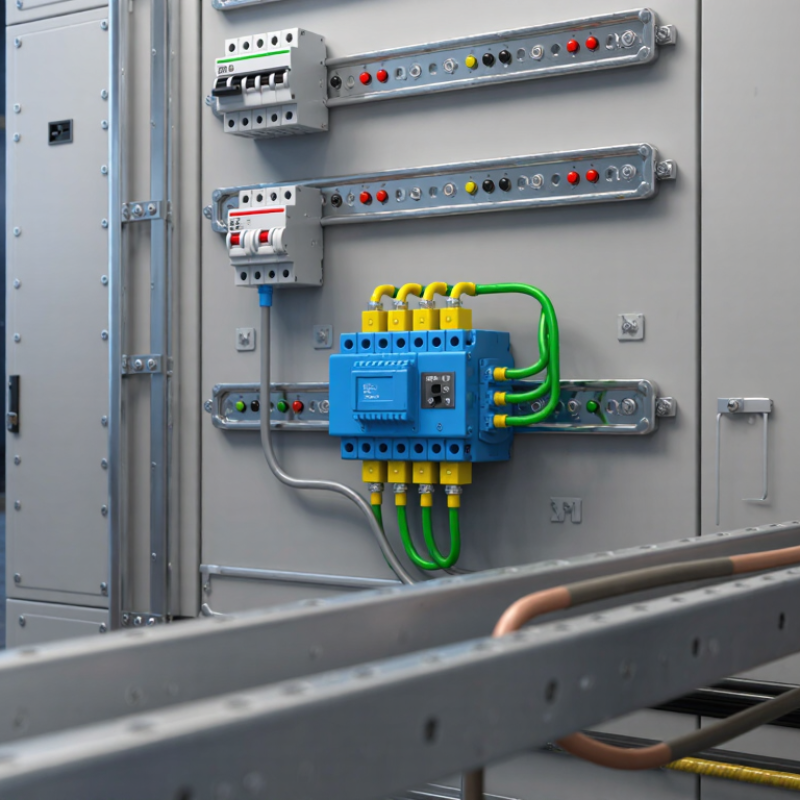
What Is an SPD Lightning Arrester and How Does It Work?

Definition and Purpose of an SPD Lightning Arrester

What Is an SPD Lightning Arrester and How Does It Work?

An SPD lightning arrester is a protective device that limits sudden voltage surges in electrical systems. SPD means surge protective device. Its purpose is not to stop lightning from forming. Instead, it redirects dangerous transient energy toward the grounding system. This action helps protect wiring, control boards, appliances, and other connected equipment.

During normal operation, the device remains nearly inactive. When a lightning-related surge or switching spike raises the voltage sharply, its internal components respond within a very short time. They create a lower-resistance path for the excess energy. The voltage across the protected circuit then falls to a safer level.

It is not a fuse. That distinction matters.

In practical inspections, correct installation often determines the arrester’s real performance. Short, straight conductors usually reduce unwanted inductive voltage. A reliable grounding connection is equally important. A poorly bonded device may look correctly installed but provide limited protection.

Small device, serious job.

Protection also depends on choosing the right voltage rating, discharge capacity, and installation location. A service-entry SPD can address external surges, while additional units may protect sensitive equipment inside a building.

No device lasts forever. Repeated surges can weaken its protective parts, sometimes without obvious warning. Maintenance checks and replacement indicators deserve attention.

One common mistake is treating an SPD as complete protection for every electrical problem. It cannot correct overloads, poor wiring, or missing grounding. Its purpose is narrower, but highly practical.

Main Components and Their Protective Roles

An SPD lightning arrester limits sudden voltage surges before they reach sensitive equipment. NOAA reports that lightning can carry about 30,000 amperes and heat surrounding air to nearly 30,000 kelvins. That energy can damage insulation, circuit boards, and communication ports within microseconds.

The main protective element is usually a metal-oxide varistor. During normal operation, it presents high resistance. When voltage rises sharply, it becomes conductive and diverts surge current toward the grounding system. The thermal disconnect works beside it. If the varistor overheats after repeated surges, the disconnect separates the damaged component and reduces fire risk. A visible status indicator then shows whether protection remains available.

Small details matter.

A backup fuse or circuit breaker helps isolate severe faults, while the enclosure protects internal parts from dust, moisture, and accidental contact. Short, straight connection conductors also reduce residual voltage, a point emphasized in IEC 61643-11 and IEEE C62.72 guidance. Long bends add inductance and can leave equipment exposed, even when the SPD has a high discharge rating. The 2024 Global Data Center Survey reported that power-related problems remained involved in 55% of impactful outages. That figure does not prove every outage needs an SPD, but it shows why coordinated protection deserves attention. In practice, installers can overtrust the indicator window. It confirms component status, not correct grounding, bonding, or system coordination. A poorly bonded SPD may look healthy and still perform poorly.

What Is an SPD Lightning Arrester and How Does It Work?

A Surge Protective Device (SPD) diverts transient surge current to earth and limits the voltage that reaches connected equipment. The chart shows a representative 8/20 μs surge-test scenario before and after SPD protection.

Main Components and Their Protective Roles

MOV

A metal-oxide varistor becomes highly conductive during an overvoltage and clamps the transient.

Gas Discharge Tube

A GDT creates a low-impedance discharge path when the surge voltage reaches its breakdown level.

Thermal Disconnector

This safety device isolates an overheated or degraded SPD from the circuit.

Earthing Conductor

A short, low-impedance path directs surge current safely toward the grounding system.

The plotted values are representative engineering values for an 8/20 μs surge waveform. Actual clamping voltage and residual voltage depend on SPD class, nominal system voltage, wiring inductance, grounding impedance, and test conditions.

How Surge Voltage Activates the SPD

What Is an SPD Lightning Arrester and How Does It Work?

How Surge Voltage Activates the SPD

An SPD lightning arrester protects electrical equipment from short, high-voltage surges. It connects in parallel with the circuit, not in series. During normal operation, its internal components present high resistance. Almost no current flows through the protective path.

A surge changes that condition within microseconds. When voltage rises above the SPD’s protection level, a metal oxide varistor sharply reduces its resistance. The device then creates a temporary route toward the grounding or neutral system. Excess surge current follows this lower-impedance path, while the voltage across connected equipment is clamped to a safer level.

The action is extremely fast.

In practical installations, lead length matters. Long, curved conductors add inductance and can weaken the protection effect. I always check the wiring path, bonding quality, and grounding continuity during inspection. A poorly connected SPD may look correct but respond poorly during a real event.

Many units include thermal protection and a status indicator. Repeated surges can degrade the internal material, even when damage is not visible. This is an easy detail to overlook. An SPD also cannot remove every risk from a direct lightning strike. Its performance depends on correct selection, suitable voltage ratings, coordinated protection stages, and regular inspection. Mistakes happen when installers focus only on the device and ignore the complete protection system.

Step-by-Step Process of Surge Protection

What Is an SPD Lightning Arrester and How Does It Work?

An SPD lightning arrester protects electrical equipment from sudden voltage surges. These surges may come from nearby lightning, switching motors, or utility disturbances. Unlike an external lightning rod, an SPD works inside the electrical distribution system. It does not attract lightning. It limits excessive voltage and gives surge energy a safer path to earth.

Step-by-Step Process of Surge Protection

During normal operation, the SPD remains mostly inactive. Its internal components, often metal-oxide varistors, present high resistance. When a surge raises the voltage sharply, the resistance drops within microseconds. The SPD then diverts current through the grounding conductor. At the same time, it clamps the voltage to a lower level. Sensitive devices receive less electrical stress. After the surge passes, the device returns to its standby state. If the surge is too strong, the SPD may disconnect permanently. That detail is easy to overlook.

A practical installation needs short, straight conductors and reliable bonding. Long wires can add unwanted inductance and reduce protection. A qualified electrician should verify conductor size, grounding quality, backup overcurrent protection, and the system’s voltage rating. Protection should be checked at the service entrance and near sensitive equipment when needed.

Tips: Keep the SPD indicator visible during inspections. Replace it after a fault signal or a confirmed severe surge. Do not assume one device protects every cable, especially data and communication lines. Testing results should be recorded, although real sites rarely stay perfect.

Common Types, Ratings, and Installation Considerations

An SPD lightning arrester protects electrical equipment from short, powerful voltage surges. It usually contains metal-oxide varistors that remain nonconductive during normal operation. When voltage rises sharply, the device conducts excess energy toward the grounding system. The surge then passes safely away from sensitive circuits. Common designs include Type 1, Type 2, Type 3, and combined Type 1+2 devices. Type 1 suits service entrances with external lightning protection. Type 2 is widely installed in distribution panels. Type 3 provides local protection near computers or control equipment.

Ratings deserve careful attention. Uc should exceed the system’s normal operating voltage. Up indicates the residual voltage reaching connected equipment. In and Imax describe discharge-current capability, but higher numbers alone do not guarantee suitability. Type 1 devices often use Iimp, while Type 2 devices commonly use In and Imax. Check the system’s earthing arrangement and the manufacturer’s tested data. A neat calculation can still miss wiring problems.

Tips: Keep connecting conductors short, straight, and separated from signal cables. Install the SPD near the incoming panel, with reliable bonding to earth. Follow IEC 61643-11 and local electrical requirements. Use suitable backup overcurrent protection when specified. Inspect status indicators after major storms and during scheduled maintenance. I have seen an excellent SPD perform poorly because its earth conductor was unnecessarily long. Installation details matter. Do not assume protection remains effective forever.

FAQS

What is an SPD lightning arrester?

It is a protective device that limits sudden voltage surges in electrical systems. It redirects excess energy toward grounding.

How does an SPD work during normal operation?

During normal operation, the SPD presents high resistance. Very little current flows through its protective path.

What happens when a surge occurs?

A metal-oxide varistor quickly reduces resistance when voltage rises sharply. Surge current then follows a lower-impedance path toward grounding or neutral.

Is an SPD the same as a fuse?

No. An SPD limits transient voltage, while a fuse interrupts excessive current. They perform different protective jobs.

Why do short connection wires matter?

Short, straight conductors reduce unwanted inductive voltage. Long, curved wires can weaken protection, even with a strong discharge rating.

Can an SPD protect against every electrical problem?

No. It cannot correct overloads, poor wiring, missing grounding, or every direct lightning risk. Its purpose is narrower.

What protective parts are commonly found inside an SPD?

Common parts include a metal-oxide varistor, thermal disconnect, backup fuse, enclosure, and status indicator. Each part has a different role.

Does the status indicator prove that the SPD works correctly?

Not completely. It usually shows internal component status, but not grounding quality, bonding, or system coordination.

When should an SPD be inspected or replaced?

Inspect it after repeated surges, unusual electrical events, or warning indications. Internal damage may be invisible. No device lasts forever.

Should one SPD protect an entire building?

Not always. Service-entry protection may need support from additional units near sensitive equipment. The arrangement needs careful review.

Conclusion

An Spd Lightning Arrester is a protective device designed to limit transient overvoltage caused by lightning strikes, utility switching, or other electrical disturbances. Its main purpose is to divert excessive surge energy away from sensitive equipment and safely discharge it into the grounding system. Key components typically include surge-limiting elements, connection terminals, a grounding path, and a thermal disconnect that helps isolate the device if it becomes overheated or reaches the end of its service life.

Under normal voltage conditions, the arrester remains inactive and allows electricity to flow normally. When a surge raises the voltage above its protection threshold, the surge-limiting element changes state and creates a low-resistance path, directing the excess current to ground. After the surge passes, the device returns to its normal condition. Common types include devices for power systems, control circuits, and communication lines, with different voltage, discharge-current, and protection-level ratings. Proper selection, grounding, wiring length, coordination, and installation location are essential for reliable protection.


Amelia

Amelia

Amelia is a seasoned marketing professional with a wealth of expertise in our company’s core offerings. With an unwavering passion for driving growth and innovation, she plays a pivotal role in shaping our marketing strategies and enhancing brand visibility. A key aspect of her responsibilities......