Why Use an MCB Automatic Switch?

Time:2026-10-13 Author:Oliver
0%

Why Use an MCB Automatic Switch?

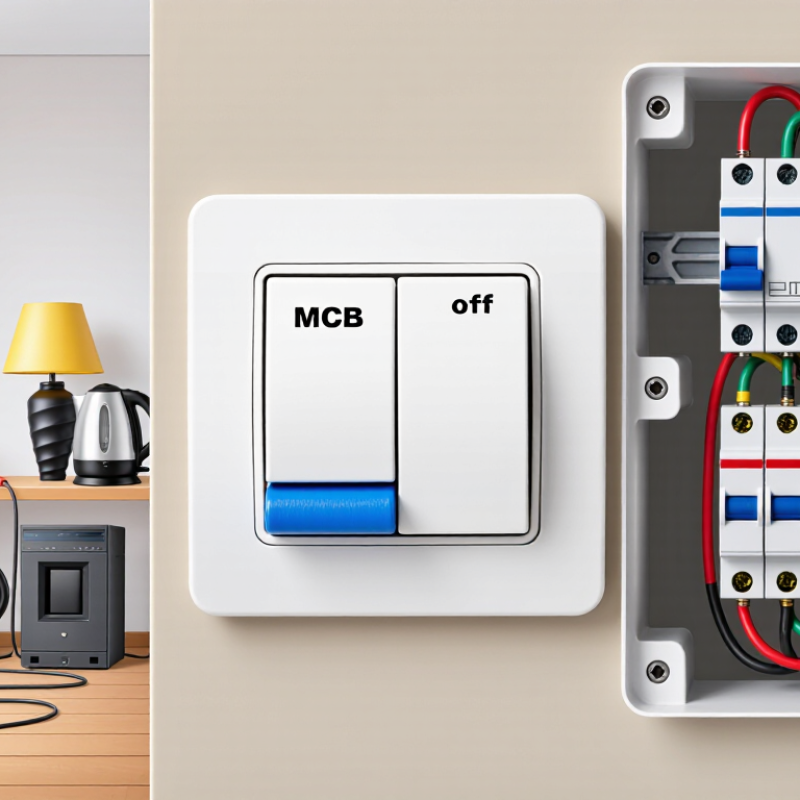
An Mcb Automatic Switch protects electrical circuits from overloads and short circuits. It disconnects power before excessive current damages cables, terminals, or connected equipment. In a residential distribution board, it may trip when too many appliances share one circuit. The handle then moves to the off position. That small movement can prevent a much larger failure.

It is also practical for routine maintenance. Unlike a traditional fuse, an Mcb Automatic Switch can usually be reset after the fault is identified. This reduces replacement time and avoids keeping spare fuses nearby. Electrical safety author John Cadick offers a useful principle: “The best electrical safety program is one that is supported by management and followed by everyone.” A circuit breaker supports that discipline, but it cannot replace it.

No device is magic.

Correct selection still matters. The rated current must match the cable size, circuit load, and expected starting current. Breaking capacity, tripping curve, pole configuration, and local installation requirements also deserve careful review. A breaker that trips repeatedly may be warning about damaged insulation, a failing appliance, or poor circuit design. Resetting it again and again is not a solution.

In practice, a qualified electrician should inspect the panel, tighten connections, and test protective devices. An Mcb Automatic Switch offers dependable protection when installed correctly. However, its performance depends on the entire electrical system. That detail is easy to overlook, especially when a quick reset restores power. Safety improves when convenience does not end the investigation.
Why Use an MCB Automatic Switch?

What an MCB Automatic Switch Is: IEC 60898-1 Ratings and Scope

An MCB automatic switch is a resettable device that interrupts excessive current. The key question is its standard scope. IEC 60898-1 covers circuit-breakers for household and similar alternating-current installations. Its principal limits include voltages up to 440 V between phases, currents up to 125 A, and rated short-circuit capacities up to 25 kA. The standard addresses 50 Hz and 60 Hz systems.

These figures matter on a real distribution board. A 230 V single-phase circuit may appear simple, yet cable size, prospective fault current, ambient temperature, and enclosure conditions affect selection. IEC 60898-1 also defines performance tests, tripping behavior, marking, and verification requirements. It is not a universal industrial specification. More demanding industrial equipment may fall under IEC 60947-2 instead. That boundary is easy to overlook.

The International Energy Agency’s Electricity 2024 report projects global electricity demand to grow by an average 3.4% annually through 2026. More connected loads make dependable low-voltage protection increasingly important. During inspection, an engineer should compare the switch rating with the conductor’s permitted current and the measured fault level. A higher number is not automatically safer. Sometimes, the installation record is incomplete. That should trigger review, not guesswork. Manufacturers’ declarations, test documentation, and the latest applicable edition of IEC 60898-1 should be checked before approval.

Why Use an MCB Automatic Switch?

IEC 60898-1 defines miniature circuit breakers for household and similar AC installations. The chart shows the standardized instantaneous magnetic-trip bands for B, C, and D characteristics, expressed as multiples of the rated current (In).

B Characteristic

Instantaneous magnetic operation at 3–5 × In. Commonly suited to circuits with low starting currents.

C Characteristic

Instantaneous magnetic operation at 5–10 × In. A practical choice for general-purpose circuits with moderate inrush current.

D Characteristic

Instantaneous magnetic operation at 10–20 × In. Intended for loads with high starting current, where the installation design permits it.

IEC 60898-1 scope includes AC circuit breakers rated up to 440 V between phases, up to 125 A, and with rated short-circuit capacity up to 25 kA. Final selection must consider conductor capacity, prospective fault current, voltage, and the load characteristics.

How Thermal-Magnetic Tripping Protects Circuits at 1.13–1.45× In

Why Use an MCB Automatic Switch?

An MCB combines thermal and magnetic protection in one compact device. Its rated current, In, defines the normal operating limit. According to IEC 60898-1:2015, a compliant MCB should not trip at 1.13× In under specified test conditions. At 1.45× In, it must trip within the standard time limit. This range protects cables from sustained overloads, such as too many heaters sharing one circuit.

The thermal element uses a bimetal strip. Excess current heats it gradually, causing a delayed release. The magnetic element reacts much faster to severe fault currents. This dual response separates everyday overloads from sudden short circuits. In practice, ambient temperature, enclosure heat, cable grouping, and installation quality can change performance. Laboratory values are useful, but field conditions may disagree. That point is easy to underestimate.

Tips: Select In below the cable’s permitted current. Check the IEC trip curve, conductor size, ambient temperature, and prospective fault current. Do not treat 1.45× In as a safe operating target. It is a disconnection threshold, not a recommended load. Records from commissioning tests should include measured loop impedance and trip verification. A qualified electrician should review unusual nuisance tripping, because replacing the MCB alone may hide an overloaded circuit.

Why Use an MCB Automatic Switch? - How Thermal-Magnetic Tripping Protects Circuits at 1.13–1.45× In

Protection Function Current Level Trip Behavior Primary Protection Purpose Typical Result in the Circuit
Normal operating range Up to 1.00 × In No intentional trip Continuous load operation The circuit remains energized when the load is within its rated current.
Thermal non-tripping zone 1.13 × In Should not trip within the conventional test time Avoid nuisance interruption from a small, sustained overload The thermal element tolerates a limited overcurrent under standardized test conditions.
Thermal tripping threshold 1.45 × In Should trip within the conventional time Protect conductors from persistent overload heating A bimetal thermal element bends as it heats and releases the mechanism after a time delay.
Conventional thermal test time Applies to 1.13 × In and 1.45 × In tests Typically 1 hour for In ≤ 63 A; typically 2 hours for In > 63 A Provide a standardized basis for overload verification The exact result depends on the applicable product standard, rated current, calibration temperature, and test conditions.
Magnetic instantaneous protection High short-circuit current; commonly 3–20 × In depending on trip curve Very rapid trip with little intentional delay Limit damage from short circuits and severe fault currents An electromagnetic element actuates the trip mechanism before thermal heating becomes the dominant effect.
B-type magnetic curve Approximately 3–5 × In Instantaneous magnetic operation within the specified range Circuits with low inrush current Often suitable for mainly resistive lighting and general-purpose loads, subject to system design.
C-type magnetic curve Approximately 5–10 × In Instantaneous magnetic operation within the specified range Moderate motor and transformer inrush currents Provides additional tolerance for normal startup current while maintaining short-circuit protection.
D-type magnetic curve Approximately 10–20 × In Instantaneous magnetic operation within the specified range High-inrush loads such as large motors or transformers Reduces unwanted trips during energization, but requires adequate fault current for reliable disconnection.
Combined thermal-magnetic action Overload and short-circuit conditions Time-delayed thermal trip for overloads; rapid magnetic trip for severe faults Comprehensive circuit protection The MCB disconnects abnormal current while helping protect cables, insulation, connected equipment, and users from fault-related hazards.

Reference basis: The 1.13 × In and 1.45 × In conventional test levels and the B, C, and D magnetic ranges are commonly specified in low-voltage circuit-breaker standards such as IEC 60898-1. Actual performance depends on the applicable standard, ambient temperature, installation conditions, rated current, and device design.

How B, C, and D Curves Handle Inrush at 3–20× In

Why Use an MCB Automatic Switch?

An MCB protects conductors from overloads and short circuits. Its curve also controls nuisance tripping during equipment startup. According to IEC 60898-1:2015, a B-curve MCB trips magnetically at 3–5 times its rated current, or 3–5× In. It suits lighting and resistive loads with limited inrush. A C-curve operates at 5–10× In. This range handles moderate motor, pump, and transformer startup currents. A D-curve allows 10–20× In, supporting motors and transformers with heavy inrush. The wrong curve can trip repeatedly, even when wiring is correctly sized.

In field testing, startup peaks often last only milliseconds, but their magnitude can exceed normal current many times. The International Energy Agency reported that global electricity demand increased by about 2.2% in 2023, adding more variable loads to commercial and residential networks. That trend makes accurate protection selection more important. However, curve ratings are not the whole design. Cable length, ambient temperature, prospective fault current, and terminal connections also affect performance. The boundary is not perfectly predictable. Real measurements can challenge assumptions.

Tips: Record the equipment’s measured inrush current, not only its running current. Compare it with the 3–20× In curve range. Verify disconnection time and fault-loop conditions with a qualified tester. A larger curve is not automatically safer. It may reduce unwanted trips, but it can also delay magnetic protection when the installation is poorly coordinated.

How 6 kA and 10 kA Breaking Capacity Limits Fault Damage

Why Use an MCB Automatic Switch?

An MCB automatic switch protects circuits from overloads and short circuits. Its breaking capacity determines how much fault current it can safely interrupt. A 6 kA MCB can stop a fault current up to 6,000 amperes, under its certified test conditions. A 10 kA MCB can handle up to 10,000 amperes. This difference matters near transformers, service entrances, and large electrical panels, where prospective fault current can be higher.

The correct rating depends on the measured or calculated fault level, not guesswork. A 6 kA device may be suitable in a small residential circuit with limited supply strength. It may be unsuitable in a commercial installation with a short cable run from the transformer. A 10 kA unit provides a wider safety margin, but it is not automatically the best choice. The installer must also check voltage, pole configuration, trip curve, cable capacity, and coordination with upstream protection.

Small details matter. During panel inspections, loose terminals, damaged insulation, or incorrect conductor sizing can increase fault risk. An MCB cannot compensate for poor installation. The breaking-capacity marking should match the system’s prospective short-circuit current and applicable electrical standards. One point deserves reflection: selecting the highest rating without engineering evidence can create cost, coordination, and maintenance problems. Verification with proper test equipment or a qualified electrician remains essential.

How DIN-Rail Resetting Supports Safer Maintenance and Uptime

Why Use an MCB Automatic Switch?

How DIN-Rail Resetting Supports Safer Maintenance and Uptime

An MCB automatic switch protects circuits by interrupting abnormal current. Its thermal element responds to overloads, while its magnetic element reacts to short circuits. Mounted on a DIN rail, the device stays aligned inside a structured distribution board. This layout makes inspection, replacement, and circuit identification more practical. During maintenance, a clear reset position helps technicians confirm whether power has been restored. That small detail matters.

I have seen teams reset an MCB too quickly after a trip. The lights returned, but the underlying fault remained. A safer approach is to isolate the circuit, inspect connected equipment, and test for damage before resetting. Only qualified personnel should perform live electrical assessments. DIN-rail resetting supports uptime because it reduces unnecessary replacement and helps restore healthy circuits faster. It does not remove the need for fault investigation. I still find this step easy to underestimate.

Tips: Label each circuit clearly. Keep the board dry and unobstructed. Check the MCB rating against the conductor size and load. After a trip, record the time, affected equipment, and reset result. If the device trips again, stop resetting and arrange a professional inspection. A reset is not a repair. It is only a controlled return to service.

FAQS

What does 1.13× In mean for an automatic circuit breaker?

In is the breaker’s rated current. At 1.13× In, it should not trip under specified test conditions.

What happens at 1.45× In?

The thermal mechanism should trip within the standard time limit. This protects cables from sustained overloads.

Why does an automatic circuit breaker use thermal and magnetic protection?

The thermal element responds gradually to overloads. The magnetic element reacts quickly to severe fault currents.

Is 1.45× In a safe operating target?

No. It is a disconnection threshold, not a recommended continuous load.

How should the breaker’s rated current be selected?

Choose a rating below the cable’s permitted current. Check conductor size, ambient temperature, trip curve, and load conditions.

What is the difference between 6 kA and 10 kA breaking capacity?

A 6 kA breaker can interrupt up to 6,000 amperes under certified conditions. A 10 kA breaker can interrupt up to 10,000 amperes.

Is the highest breaking capacity always the best choice?

Not necessarily. The correct rating depends on prospective fault current, system voltage, wiring, and protection coordination.

What should happen after the breaker trips?

Isolate the circuit and inspect connected equipment. Check for damaged insulation, loose terminals, or overloaded wiring.

Can the breaker be reset immediately?

A reset is not a repair. Record the event, investigate the cause, and stop resetting if the breaker trips again.

How does DIN-rail mounting support maintenance?

It keeps the breaker aligned inside the distribution board. Clear labels make inspection and circuit identification easier.

Can installation conditions change breaker performance?

Yes. Heat, enclosure temperature, cable grouping, and poor installation can affect operation. Field results may differ.

What information should commissioning records include?

Records should include loop impedance measurements and trip verification. Small details matter.

Conclusion

An Mcb Automatic Switch is a compact protective device designed to safeguard electrical circuits from overloads and short circuits. Commonly evaluated under IEC 60898-1, it combines thermal and magnetic protection: the thermal element responds to sustained overcurrent, typically within the 1.13–1.45× In range, while the magnetic element reacts rapidly to severe faults. This dual action helps reduce overheating, insulation damage, and the risk of circuit failure.

Different tripping curves make the device suitable for various loads. B curves generally respond to lower inrush currents, while C and D curves tolerate progressively higher starting surges, covering approximate magnetic trip ranges from 3× to 20× In. A 6 kA or 10 kA breaking capacity indicates the maximum fault current the switch can safely interrupt under specified conditions. Its DIN-rail installation and resettable operation also support organized maintenance, quick restoration, and improved system uptime without replacing the device after every trip.


Oliver

Oliver

Oliver is a seasoned marketing professional with a wealth of expertise in driving brand awareness and engagement. With a deep understanding of our company's product offerings, he consistently delivers high-quality content that enriches our professional blog. His insights not only shed light on......